
When love is lavender
A once-secret type of union is making a comeback.
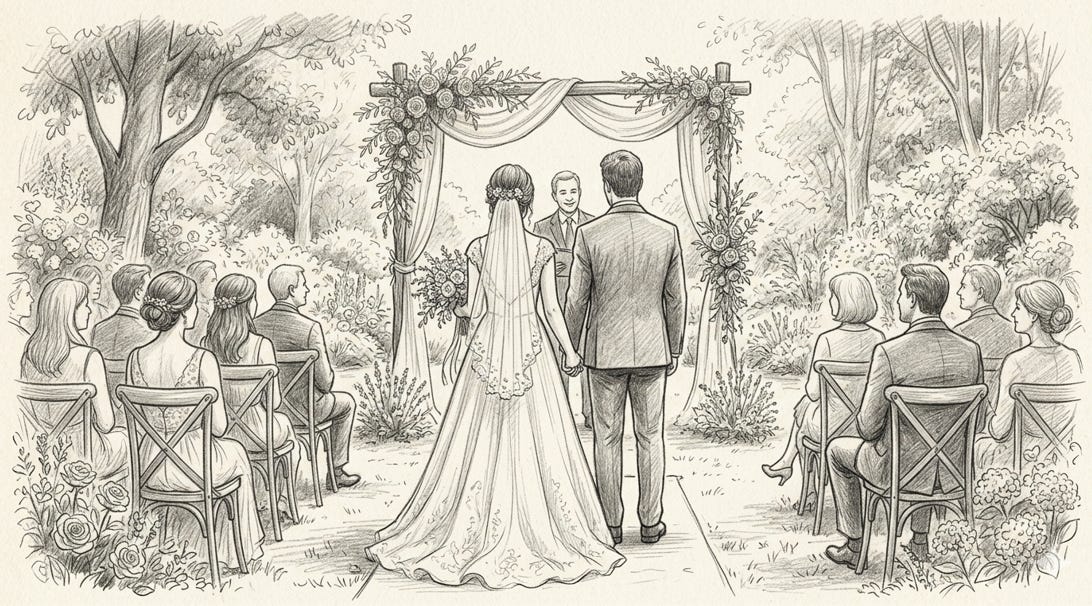
For much of the 20th century, love did not always look the way society expected.
Behind neatly posed wedding photographs and polite introductions at dinner parties were marriages built not on romance, but on quiet agreement.
These were known as lavender marriages — relationships formed to meet social expectations while concealing a deeper truth.
The phrase sounds gentle, almost fragrant, but its origins are rooted in necessity. “Lavender” had long been a discreet reference to homosexuality, circulating in artistic and literary circles well before public discussion was safe.
For gay men and women living in a time when same‑sex relationships were illegal, taboo or career‑ending, marriage to a person of the opposite sex offered protection. It was a way to move through the world unchallenged.
Lavender marriages were particularly common in the early‑to‑mid 1900s, when public image carried enormous weight. Nowhere was this more visible than in Hollywood’s golden age.
Film studios tightly controlled actors’ private lives, insisting on wholesome public personas. Rumours alone could destroy a career. Some stars, under intense pressure, married to deflect suspicion. Actor Rock Hudson’s 1955 marriage, later understood in this light, has become one of the most cited examples.
Yet these arrangements were not confined to celebrities. Ordinary people entered similar marriages to keep jobs, avoid police scrutiny or satisfy deeply conservative families.
Homosexuality was only progressively decriminalised between the mid‑1970s and late 1990s, and social attitudes often lagged behind the law. For many, marriage was not about deception but survival.
Life inside a lavender marriage varied widely. Some couples formed close friendships and supported each other emotionally. Others lived largely separate lives, bound by a shared understanding and mutual discretion.
While these marriages could offer safety, they also came with costs — silence, restraint and, for many, the lifelong burden of hiding a fundamental part of themselves.
Fast forward to the present day, and lavender marriages are being talked about again — this time in a very different light. A recent ABC News report notes that some younger Australians are exploring the idea not to conceal their sexuality, but as an alternative way of organising adult life.
In a world of soaring housing prices, economic uncertainty and dating fatigue, marriage is being reimagined as a partnership rather than a romantic ideal.
Today’s versions look markedly different from those of the past. They are usually entered into openly, with clear conversations about expectations, intimacy and independence.
Importantly, they exist alongside legal recognition of same‑sex marriage and greater social acceptance, not in opposition to it.
Still, historians and commentators urge care in how the term is used. Lavender marriages were born from exclusion and fear, and their history is inseparable from discrimination. Understanding them means acknowledging both their human ingenuity and the injustice that made them necessary.
Whether viewed as relics of a more constrained era or as evolving partnership models, lavender marriages remind us that marriage has always been about more than love alone — it has also been about safety, belonging and the freedom to live as oneself, or at least to survive until that freedom becomes possible.
If you like this kind of thing, feel free to buy me a coffee.