
Setting targets in retirement
Yes, it’s time to take it easy. But for your own sake, set some deadlines.
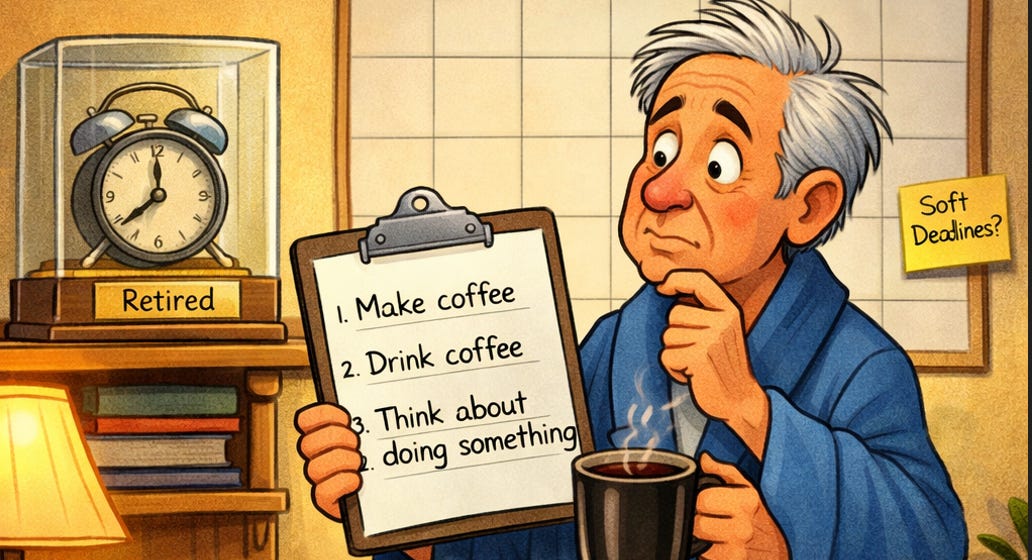
For decades, we lived by the rhythmic tyranny of the alarm clock. We measured our lives in quarterly reviews, Monday morning briefings and the desperate countdown to Friday at five.
When retirement finally arrives, that sudden silence can feel like the ultimate victory. We wake up, pour a second cup of coffee, and look out at a day that belongs entirely to us. It feels like we have all the time in the world — and in a very real sense, we do.
However, many of us soon discover a paradox: without the “racket” of external demands, the days can begin to blur into a shapeless fog.
While the stress of a career is something few of us miss, the structural integrity it provided was a hidden benefit. Without targets and deadlines, the human mind — especially one sharpened by 60 years of activity — can begin to drift.
We don’t just need rest; we need a reason to stay engaged and functioning.
The secret to a vibrant retirement isn’t found in a frantic schedule, but in the “soft deadline”.
This is the art of creating personal targets that keep us tethered to the world. It might be deciding to finish a woodworking project by the end of the month or committing to walk a certain number of kilometres before a charity event in the spring.
These aren’t burdens; they are scaffolding. They provide the “why” for getting out of bed and the “how” for measuring our progress.
When we lack targets, we risk falling into a state of “functional drift”. Tasks that once took an hour begin to expand to fill the entire day.
Procrastination, once a vice of the busy, becomes a survival mechanism for the idle.
By setting small, achievable deadlines — such as finishing a book for a club meeting or preparing a garden bed for the first frost — we maintain our executive function and cognitive sharpness.
Moreover, these self-imposed goals keep us socially and mentally sane.
They give us something to talk about other than the weather or our latest aches and pains. They make us participants in our own lives rather than spectators.
Retirement should be a liberation, but even a bird needs a direction to fly. By setting our own targets, we ensure that our newfound time isn’t just spent, but invested in a life that remains purposeful, sharp and deeply satisfying.
If you like what I’m doing here, you may want to buy me a coffee