
It’s only lateral
How the way we thought about how we think changed in the 1960s.
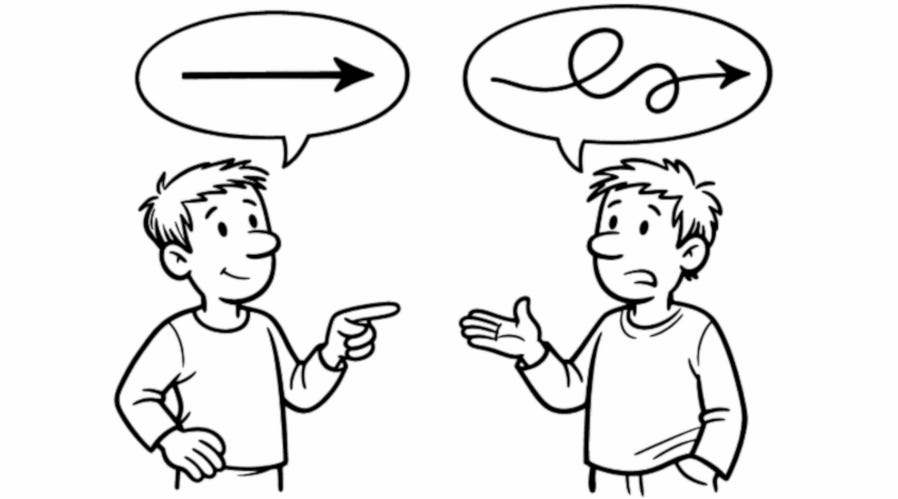
In 1967, psychologist Edward de Bono coined a term that would forever change how we approach problem-solving: lateral thinking.
While most of us are trained from childhood to use “vertical” logic — a step-by-step process of moving from one proven premise to the next — lateral thinking encourages us to hop off the tracks entirely. It isn’t about thinking harder; it’s about thinking differently.
To understand this concept, imagine a deep hole in the ground. Vertical thinking is the act of digging that same hole deeper to find the treasure. It is analytical, sequential, and concerned with being “right” at every stage.
Lateral thinking, however, is the act of moving elsewhere to dig a new hole. In a vertical mindset, you exclude what is irrelevant, but in a lateral mindset, you welcome “random” inputs to see where they lead. It is the difference between playing a game of chess by the book and changing the rules of the game to find a path to victory.
This mental shift isn’t just a vague suggestion to “be creative”; it involves specific manoeuvres to break through cognitive biases. One such technique is random entry, where you pick an unrelated word — like “cloud” — and force a connection to a problem, such as chair design, perhaps leading to ideas about weightlessness.
Another is provocation, or “PO,” where you make an intentionally “impossible” statement like “Cars should have square wheels.” While logically absurd, this provocation shocks the brain out of its routine, potentially leading to breakthroughs in suspension or traction technology.
Finally, the technique of challenge asks us to question why a process exists at all, rather than simply trying to optimise it.
In an era of rapid AI development and automation, the ability to synthesise disparate ideas is becoming our greatest human advantage.*
While logic can be programmed and data can be processed at lightning speed, the “leap” required to revolutionise an industry requires a departure from traditional patterns.
Lateral thinking allows us to solve “wicked problems” where the data is messy and the standard path has become a dead end. By deliberately moving sideways, we stop being victims of our own expertise and start seeing the hidden opportunities that have been sitting right next to us all along.
*Ironically, AI assistance was used in writing this article.