
Explainer: the lavender soap theory
You can’t take it with you, but should you use it or give it away?
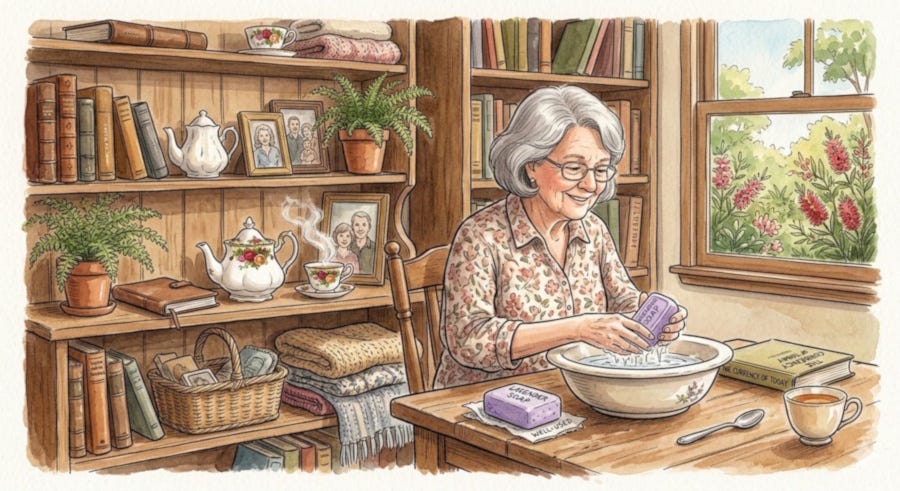
The “lavender soap theory” is a poignant metaphor for the way we treat our most treasured possessions, often delaying our own joy in anticipation of a “special occasion” that may never arrive.
The origin of the concept is rooted in the domestic habits of previous generations, specifically the image of a grandmother who receives a beautiful, fragrant bar of embossed lavender soap as a gift.
Instead of using it to enjoy a luxurious bath, she tucks it away in a linen drawer to scent the sheets, waiting for a milestone or a guest worthy of such a “luxury”. Decades later, the soap is discovered — shrivelled, cracked and having lost its scent — unused and unappreciated.
It represents a life lived in a state of perpetual postponement, where the best things are saved for a future that remains perpetually out of reach.
For those navigating their later years, this theory takes on a profound currency. There is a natural tendency to accumulate “lavender soaps” in the form of fine china, expensive stationery or heirloom clothing.
We often hang on to these items not because we are using them, but because we are waiting for the perfect moment to justify their existence.
However, the reality of ageing serves as a reminder that the most special occasion is the present. Taking the good crystal out for a Tuesday night dinner or wearing the silk scarf for a simple walk in the park isn’t an act of waste; it is an act of honouring the value of your own time.
Applying this logic to the habit of hoarding objects we no longer need requires a shift in perspective.
You don’t necessarily have to purge every closet or adopt a clinical minimalism. Instead, it is about being selective and recognising that an object’s true worth is found in its utility or the pleasure it provides. If an item is sitting in a box, it is essentially dead; if it is being used, it is alive.
There is a unique satisfaction in the realisation that you cannot take these things with you. By using your best items now, you enjoy them fully.
Conversely, by passing them on to others while you are still around to see them used, you can take pleasure in the fact that someone else is finally unwrapping the soap.
The goal isn’t just to empty a room, but to ensure that nothing beautiful goes to waste while waiting for a “someday” that has already arrived.
If you like what I’m doing here, you may want to buy me a coffee