
Are we facing a ‘grey tsunami’?
Navigating the ageing population will be a huge global challenge.
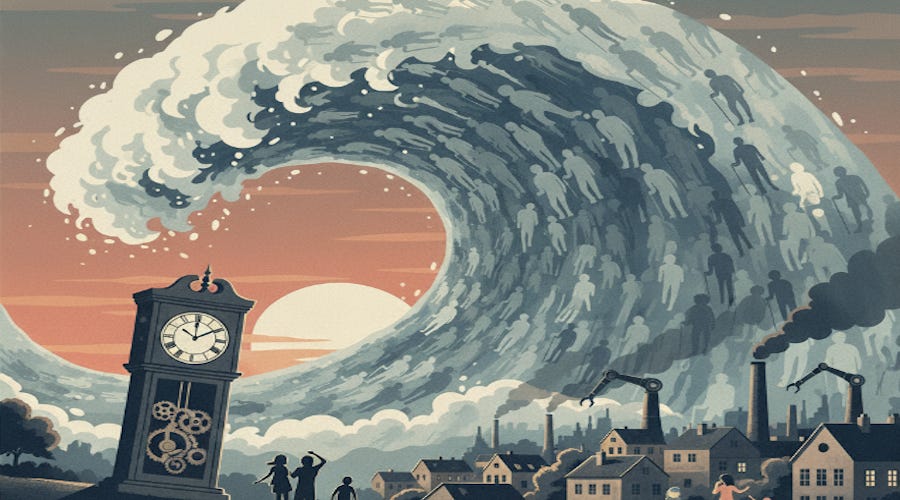
Many developed nations, and increasingly some developing ones, are confronting a demographic shift of unprecedented scale: a rapidly ageing population.
Driven by declining birth rates, increased life expectancy and, in some cases, low rates of immigration, this “grey tsunami” presents a complex web of economic, social and cultural challenges that threaten to reshape the fabric of society.
One of the most immediate and profound impacts is on economic productivity and labour markets. As the proportion of retirees grows and the working-age population shrinks, countries face a diminished workforce.
This can lead to labour shortages, particularly in demanding sectors, and a decrease in overall economic output.
Innovation and entrepreneurial spirit may also wane as a younger, more dynamic demographic becomes a smaller portion of the population.
The burden on younger generations to support a larger elderly demographic through taxes and social security contributions will inevitably increase, potentially leading to intergenerational friction.
Healthcare systems will also be put under immense strain. An older population typically requires more extensive medical care, from chronic disease management to long-term care facilities.
This could translate to escalating healthcare costs, demanding greater public expenditure and potentially leading to longer waiting times for services, or even the rationing of care. The need for specialised geriatric care and a larger healthcare workforce will become critical, yet ironically, the very workforce needed may be in decline.
Socially, the shift may manifest in various ways. Traditional family structures may evolve, with fewer children to care for elderly parents. Communities might become less vibrant, as schools close due to lack of students and youth-oriented businesses struggle.
The cultural landscape could also see a transformation, with a greater emphasis on the needs and preferences of an older demographic, potentially at the expense of younger voices and emergent trends.
For nations with consistently low birth and immigration rates, the changes will be profound:
Life could become characterised by a smaller, more homogeneous population. Villages and towns might shrink, leading to infrastructure challenges and a sense of decline.
Innovation could slow, and economic dynamism might be replaced by a focus on stability and preservation.
Retirement ages may be pushed back significantly, and automation will become not just an efficiency tool, but a necessity to compensate for labor shortages.
The challenge is not simply about getting older; it’s about the fundamental imbalance between those who work and pay tax and those who draw from social safety nets.
Addressing this will require a multi-faceted approach, including policies to encourage higher birth rates, strategic immigration to bolster the working population, and reforms to pension and healthcare systems to ensure their long-term sustainability.
Without proactive measures, the grey tsunami risks overwhelming the very societies that have achieved such remarkable longevity.